
What Is the Peon Exploitation System?
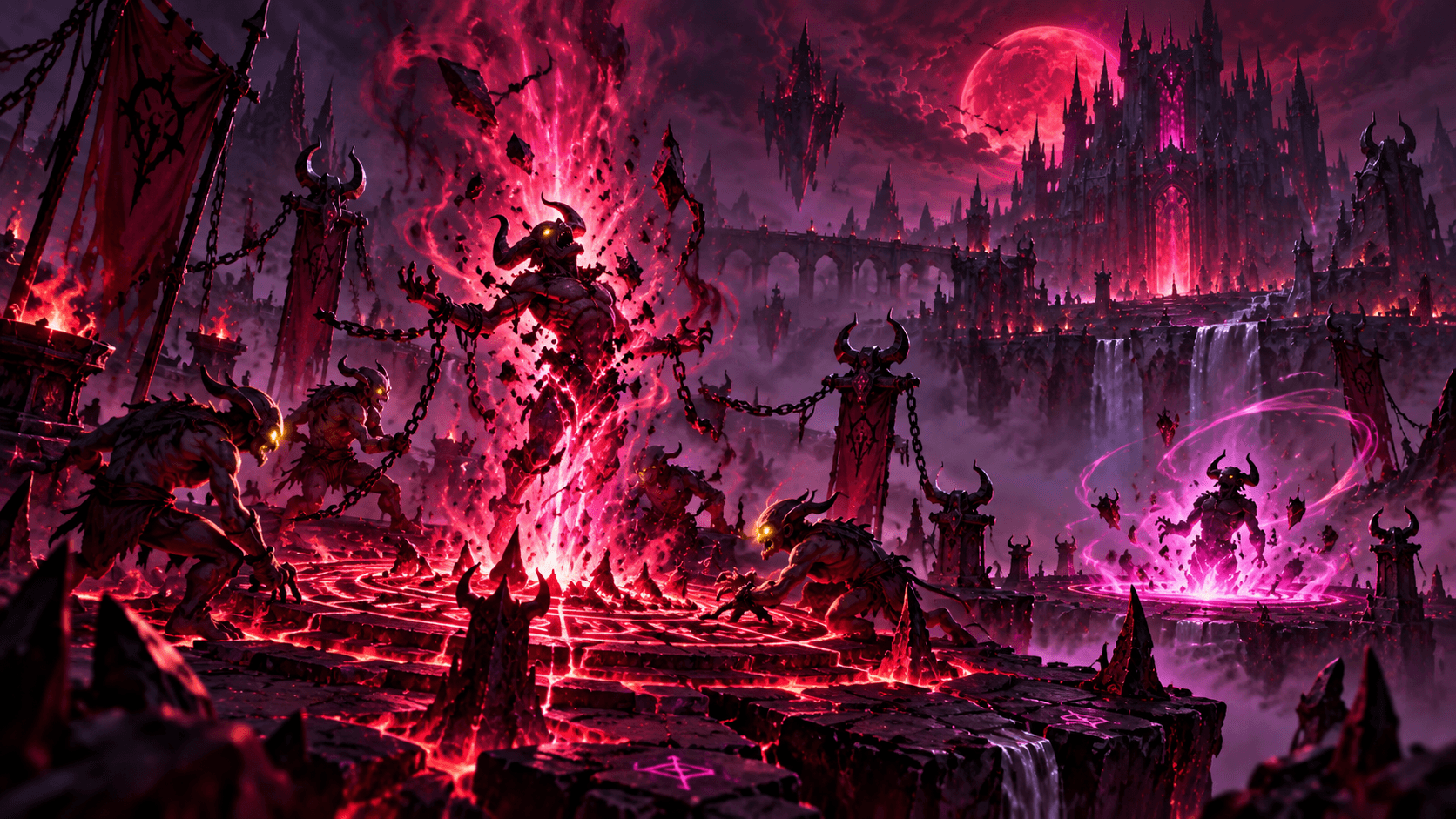
The Peon Exploitation System is the defining combat idea in DEMONS' NIGHT FEVER: allied Peons are not only units to preserve, but resources that can be sacrificed during a tactical battle. Official descriptions mention Kill Skills and Sacrifices, including detonating underlings to attack enemies. Peons also reincarnate stronger after being killed.
Officially confirmed: Sacrificing allied Peons is a deliberate core mechanic, not merely a normal defeat state. Reincarnation connects death to future strength. The official material does not yet document every trigger, targeting rule, cost, damage value, or limit.
The central decision is a trade-off. A sacrifice may create immediate value, but it also removes an active ally from the present battle plan. Reincarnation may improve later potential, but official promotional text does not prove that every death produces the same benefit.
Why Sacrifice Allied Peons?
Official store copy presents brutal tactics as a route to victory and specifically connects Peon sacrifice with offensive effects. That establishes the purpose of the system: players can exchange an allied unit's current availability for a tactical result.
Strategy Tip: Consider sacrifice when it solves a concrete problem—such as converting a Peon you can afford to lose into pressure against an important enemy group. “The button is available” is not, by itself, a reason to use it.
Three questions keep the decision grounded:
- What immediate result is the sacrifice expected to create?
- Which actions or positions disappear when that Peon is removed?
- Can the remaining force still complete the battle objective?
These questions are recommendations based on the confirmed system. They are not a claim about an undisclosed scoring formula.
Kill Skills and Sacrifice Mechanics
Officially confirmed: The Steam description names both Kill Skills and Sacrifices, and says Sacrifices can detonate underlings. The official website also describes detonating allied Peons to wipe out enemies.
What those sources do not establish is equally important. They do not provide a verified skill database, exact area shapes, damage scaling, activation costs, turn-order behavior, friendly-fire rules, or a universal sequence for combining these actions. Promotional footage can show an example without proving every rule behind it.
Strategy Tip: Use the released interface's target preview and consequence warnings as the authority. Compare the displayed result with the value of keeping the Peon active, especially when that unit still fills a necessary role.
Understanding Reincarnation
The official site states that the more Peons are killed, the stronger they reincarnate. This confirms a long-term growth relationship between death and a Peon's return. It does not confirm exact stat gains, timing, retained skills, reincarnation caps, or whether different causes of death produce different results.
Reincarnation changes how players should think about losses, but it should not erase short-term planning. A stronger future Peon cannot help the current encounter if the remaining force can no longer finish its objective.
For the broader development loop, continue to the Progression & Base Building Guide.
Tactical Trade-Offs
Every sacrifice decision sits between four competing needs:
- Immediate effect: What problem does the action solve now?
- Current force: What capability leaves the field with the Peon?
- Objective security: Can the remaining units still win or survive?
- Future growth: What will need to be verified about reincarnation afterward?
Strategy Tip: Favor decisions whose immediate purpose is clear and whose downside you can describe before acting. If you cannot explain what the remaining army will do next, the sacrifice may be premature.
When to Consider Sacrificing a Peon
These are general strategy recommendations, not confirmed optimal conditions:
- The action directly advances the stated battle objective.
- The Peon has already completed its essential role in the current plan.
- The effect addresses a dangerous concentration of enemies shown by the interface.
- Preserving the Peon would not meaningfully improve the remaining turns.
- You have checked that the rest of the force still covers essential jobs.
Beginners should first understand normal positioning and objective play in the Beginner Guide, then evaluate sacrifice as one tool within that plan.
When Preserving Units May Be Better
Preservation may be the more sensible recommendation when a Peon is still needed to hold a position, reach an objective, support another unit, or provide flexibility later in the encounter. It may also be preferable when the sacrifice's effect cannot be verified from the interface.
Strategy Tip: Do not let the promise of future reincarnation hide an immediate failure condition. Preserve the unit when losing its current contribution would make the battle plan brittle.
Common Tactical Mistakes
- Sacrificing before reading the target preview or objective.
- Treating reincarnation as proof that every death is profitable.
- Removing several units without checking what roles remain.
- Assuming trailer footage reveals a complete damage formula.
- Declaring a fixed sacrifice order “best” without release-version evidence.
- Ignoring limited chapter time while repeatedly testing an unclear tactic.
What Still Needs Gameplay Verification
The following details remain unverified by the cited official text: complete Kill Skill and Sacrifice lists; damage, range, and cost formulas; activation timing; targeting restrictions; reincarnation requirements; exact stat changes; retained abilities; and whether any sacrifice type changes the resulting growth.
This page will not invent those answers. Until release-version evidence is available, use the system descriptions as confirmed context and the tactical sections as recommendations to test against the actual interface.
Official References
- Official DEMONS' NIGHT FEVER website — allied Peon detonation and stronger reincarnation.
- Official Steam store page — Peon Exploitation, Kill Skills, Sacrifices, and the role of allied sacrifice.