
Quick Start
To get started in DEMONS' NIGHT FEVER, treat every decision as a trade between immediate battle power and the strength of your developing army. Learn the current objective, identify which Peons your plan depends on, and avoid spending limited chapter time without a clear purpose. The signature Peon Exploitation System makes allied sacrifice part of combat, while misdeeds and Perverse Points support longer-term growth.
Officially confirmed: DEMONS' NIGHT FEVER is a single-player, grid-based strategy RPG. Official materials confirm allied Peon sacrifice, Peon reincarnation, misdeed-driven progression, limited-time chapter activity, and chapter bosses. The release materials do not provide complete menu instructions, formulas, or optimal routes.
Strategy Tip: Before committing to an action, ask whether it helps you win the current battle, improves the army for later, or prepares for the chapter boss. If it does none of those jobs, consider preserving the resource or time instead.
What Kind of Strategy RPG Is This?
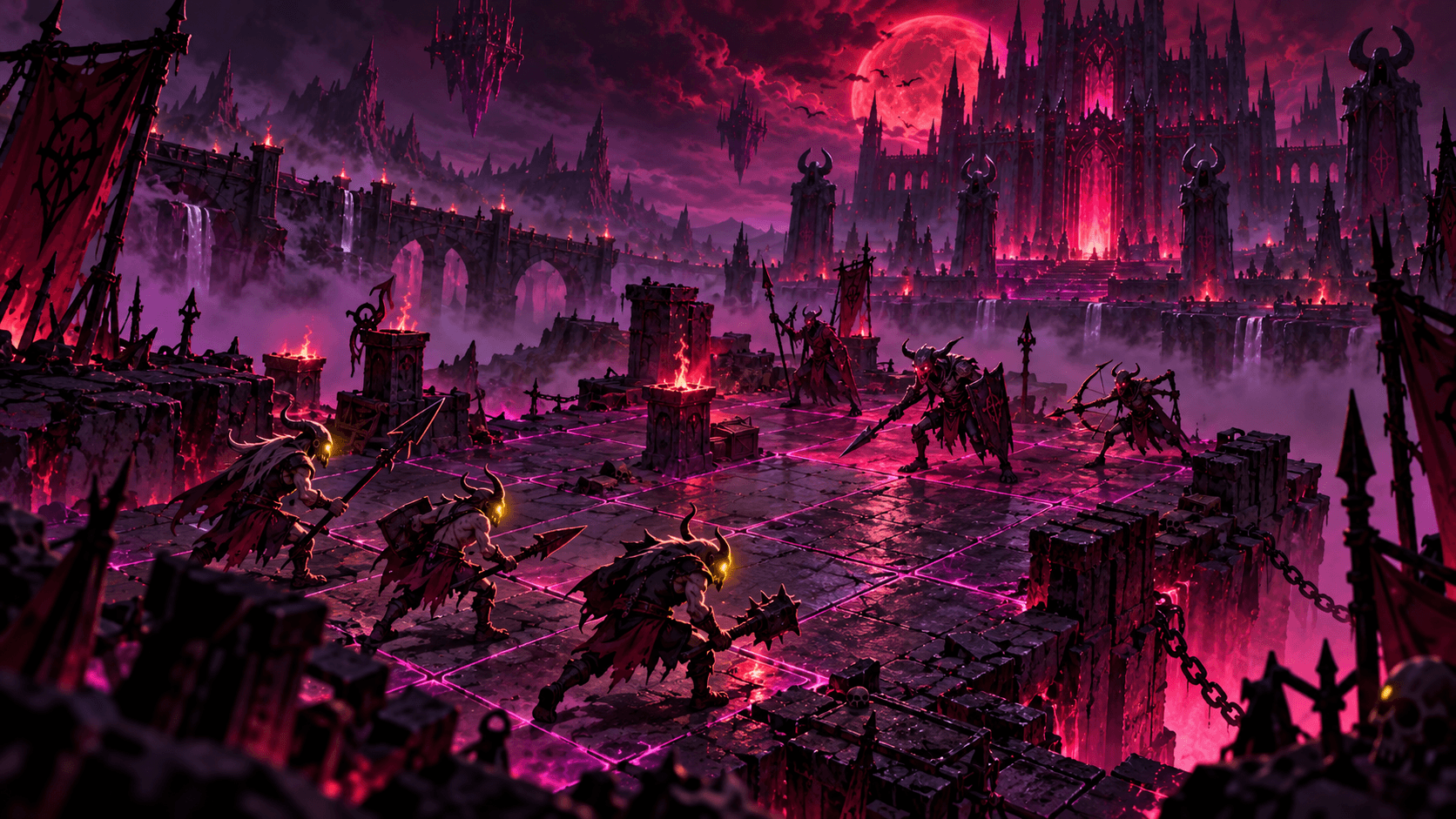
The game begins with the familiar foundation of grid-based tactical combat, but it deliberately challenges the usual instinct to keep every ally alive. Peons can be exploited during battle, including being sacrificed or detonated. Official descriptions also say Peons become stronger through reincarnation after being killed.
That does not mean every loss is automatically good. Sacrificing a unit changes what remains available in the current encounter, while reincarnation concerns later growth. The useful beginner question is therefore not “Should I ever lose a Peon?” but “What does this loss accomplish right now, and what does it cost my current plan?” The dedicated Peon Exploitation Guide develops that decision in more detail.
Understanding the Battle Structure
Official store material describes “classic grid-based strategy games” as the combat foundation. Players should expect positioning and unit availability to matter, but the available sources do not document every movement rule, action order, terrain effect, or control input.
Start each battle by separating confirmed information from assumptions:
- Read the displayed objective and any failure conditions.
- Identify which allied units are necessary for the plan you want to attempt.
- Note enemy groups that could make a sacrifice or Kill Skill useful.
- Keep an alternative route in mind if an aggressive action removes a Peon you still need.
Strategy Tip: Use early encounters to observe how the interface communicates range, targets, and consequences. Do not rely on a guessed control scheme or presumed damage formula.
The Peon Exploitation System
Officially confirmed: The Peon Exploitation System allows allied Peons to be sacrificed during battle. Official descriptions specifically mention Kill Skills and Sacrifices that detonate underlings, and the official site says Peons reincarnate stronger after being killed.
For a new player, the important lesson is that Peons can serve more than one role. A Peon may contribute as an active unit, become part of an immediate offensive tactic, and participate in longer-term reincarnation growth. Those roles compete with one another, so sacrifice should be treated as a tactical choice rather than a routine button press.
No official source currently supplies complete damage values, targeting rules, costs, or a full Kill Skill list. This guide therefore does not claim that a particular sacrifice sequence is optimal.
Understanding Misdeeds and Progression
Official Steam information says misdeeds award Perverse Points, which are poured into building a stronger evil army. It also names Abductions and Pillaging as ways to strengthen characters within limited time. These terms establish the progression loop, but they do not confirm exact rewards, prices, unlock conditions, or upgrade trees.
Use the Progression & Base Building Guide to distinguish the confirmed loop from details that still require gameplay verification.
Strategy Tip: Decide what weakness you want the next progression action to address before spending time or points. A focused improvement plan is easier to evaluate than buying or performing actions simply because they are available.
Managing Limited Chapter Time
Officially confirmed: Character-strengthening activity takes place within limited time, and each chapter leads toward a boss whose defeat changes the game situation. Official sources do not state a universal countdown value or prove that every activity consumes time in the same way.
Treat chapter time as a planning constraint. Keep three priorities visible: the current story or battle objective, the army improvement you still need, and readiness for the boss. When choosing between activities, consider which one closes the largest practical gap.
Strategy Tip: Leave a preparation margin instead of assuming every remaining action can be spent on growth. This is a general risk-management recommendation, not a verified timing formula.
Preparing for Chapter Bosses
The current official material confirms chapter bosses but does not provide a complete boss list, attack patterns, weaknesses, health values, or required team compositions. Preparation should therefore focus on transferable questions:
- Can the current army still execute its intended battle plan?
- Have recent sacrifices left an important role uncovered?
- Is the next progression action solving a known problem?
- Are you keeping enough chapter time to attempt the boss without depending on an unverified route?
The Chapters & Bosses Guide explains this planning framework without inventing boss-specific solutions.
Common Beginner Mistakes
These are strategy cautions derived from confirmed systems, not claims about hidden game rules:
- Treating every available sacrifice as mandatory. Immediate damage may not justify losing a unit needed for the rest of the plan.
- Assuming reincarnation removes every cost. Official material confirms stronger reincarnation, but not that every sacrifice is equally efficient.
- Spending chapter time without a goal. Limited time makes unfocused progression harder to evaluate.
- Planning around unverified numbers. Promotional descriptions establish systems, not precise formulas.
- Entering a boss phase without reviewing the army. Chapter victories change the situation, so preparation should happen before the transition.
Practical First-Session Checklist
- Confirm the battle or chapter objective shown by the game.
- Learn how the interface previews movement, targets, and consequences.
- Identify Peons that are essential to your current formation.
- Test the Peon Exploitation System only when the result has a clear purpose.
- Review what reincarnation actually changed before drawing conclusions.
- Track which actions use limited chapter time.
- Choose progression actions that address an observed weakness.
- Review army readiness before committing to a chapter boss.
- Record values from the released game rather than relying on promotional assumptions.
Verification Boundary
This guide is complete as an official-source beginner primer, not as a frame-perfect walkthrough. Controls, tutorial sequence, exact timers, resource formulas, skill unlocks, boss solutions, and optimal builds still require release-version gameplay verification. Recommendations above are planning principles based on confirmed systems and are intentionally presented as advice rather than guaranteed outcomes.
Official References
- Official DEMONS' NIGHT FEVER website — platforms, release information, Peon sacrifice, detonation, and reincarnation.
- Official Steam store page — grid-based combat, Kill Skills, Sacrifices, misdeeds, Perverse Points, limited-time activity, and chapter changes.